It’s been said that once you slip the bonds of Earth and take to flight in the sky, you’ll never be quite the same. That’s been my experience over a lifetime of flying. For those who have never controlled an aircraft in flight, they will understand. But to my fellow pilots out there, you know what it is.. it’s an addiction. Flying is a seductive mistress.
When I was a young pilot, I wanted to get my hands on the hottest, fastest, most complex airplane that I could fly. It was a nearly insatiable desire, but that’s what the joy of flight is; it consumes you. On weekends you would find me at flight breakfasts held at different airports across the State of Iowa, or at airshows. After all, the late 1970’s and 1980’s were the heyday of general aviation. Student pilots were everywhere, and scheduling rental airplanes could be difficult. Even though I craved the need for speed, I had a mysterious connection to older aircraft, especially of World War II vintage. I could never explain it, but I was drawn to them like a moth to a flame.
Never give up your dreams of flying, be sure to make it a reality in your lifetime… Matt – aka This Old Pilot
To be honest, I’d often look down on the pilots of vintage aircraft, ego making myself feel superior to them in some respect. But that is one of the vagaries of youth, where you think you have everything figured out, when you really don’t. I thought those old taildraggers were antiquated technology, and not worthy of me to fly.
Boy, was I WRONG!
I was curious as I watched the old tailwheel airplanes land. Some would land on their main wheels, others bouncing to a stop in a 3 point landing. When the Iowa winds were blowing, often you’d witness a pilot bringing one of these strange craft back to earth on a single wheel. To the uninitiated, it seemed like a combination of alchemy and magic. Such was the allure of the old tailwheel aircraft.
So naturally, I had to experience this mystical thing for myself, and found a CFI with an old Taylorcraft at the Nevada, Iowa airport which no longer exists. When I climbed inside, I felt like flying the old contraption would be a piece of cake. HA! Wrong again! That Taylorcraft humbled me, both on takeoff and landing.
Eventually my journey led me to getting trained in a Citabria with one of the most demanding instructors I’d ever flown with. At first, I thought he was being harsh with me. In reality, he was teaching me how to survive. And the Citabria was my initial entrance into the exciting world of aerobatics. Words in one article cannot describe how learning aerobatics bettered me in nearly every aspect of my flying. You want to talk about upset recovery? Learn aerobatics. Want to know how an airplane really flies? Learn aerobatics. Want to be humbled? Learn aerobatics. An unexpected bonus was that after learning how to properly pilot a tailwheel aircraft, everything else about my flying improved. My landings were smoother, especially at night. What a surprise that was.
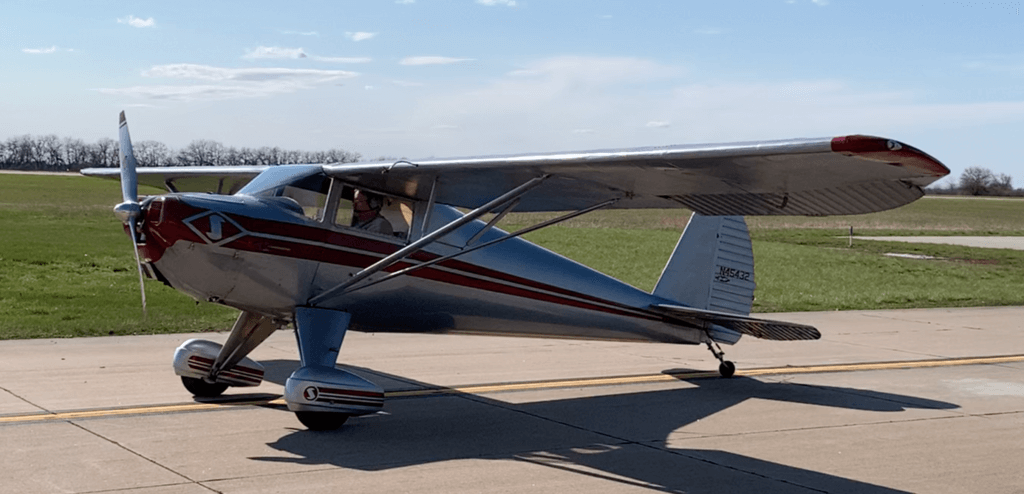
Fast-forward 40 years, and I find myself flying one of the most cantankerous taildraggers out there, a 1945 Luscombe 8A. The airplane has a certain mythos about it, a reputation for being intolerant of fools. That general observation would be correct, because the Luscombe does not tolerate being disrespected. She is a demanding mistress, giving the respect given to her, and likes a deft touch on the controls. In my opinion and experience, the Luscombe demands a skilled stick and rudder pilot. She’s not a Piper Cub, a Taylorcraft, or an Aeronca Champ.
My Luscombe will never break any speed records, nor provide the creature comforts of modern aircraft. Yet she’s mine, and I know her well. We’ve traveled many miles together, in windy conditions that other pilots won’t fly in. But when the girl lands and wheels onto the ramp of an airport, she still draws a crowd of admirers at the age of 75 years young.
I thoroughly enjoy flying the Luscombe 8A. It handles like you’d expect an airplane manufactured in 1945 would. The Luscombe’s controls are positive, with rudder inputs being the most sensitive of all. Important tip: Don’t ‘punch and jab’ the rudder pedals on a Luscombe, unless you’re willing to go for a wild ride that could end badly for you and the airplane. A Luscombe isn’t like a Cub or a Champ on rudder response. The best way I can describe it is: you think, and it goes. The Luscombe also slips better than most, allowing you to scrub off excess altitude quickly. It’s truly a stick and rudder airplane, and you do need to keep that ball centered, lest you slip and skid uncoordinated all over the sky. It’s worth mentioning that you’re constantly busy making tiny control inputs all the time when flying, which some people find fatiguing.
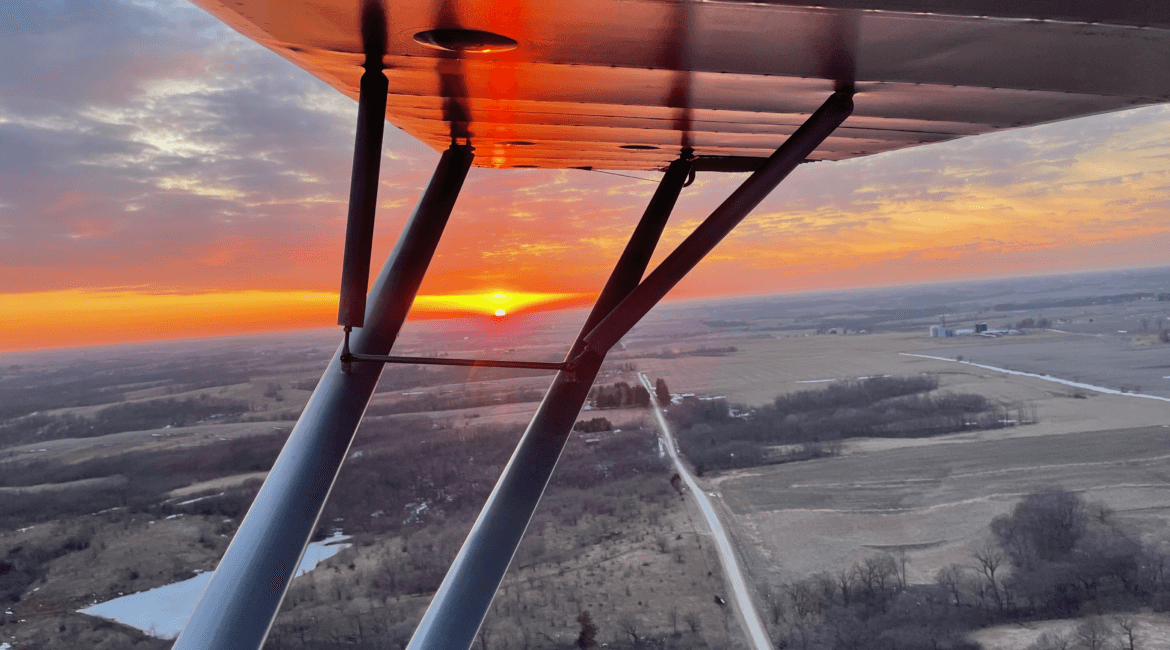
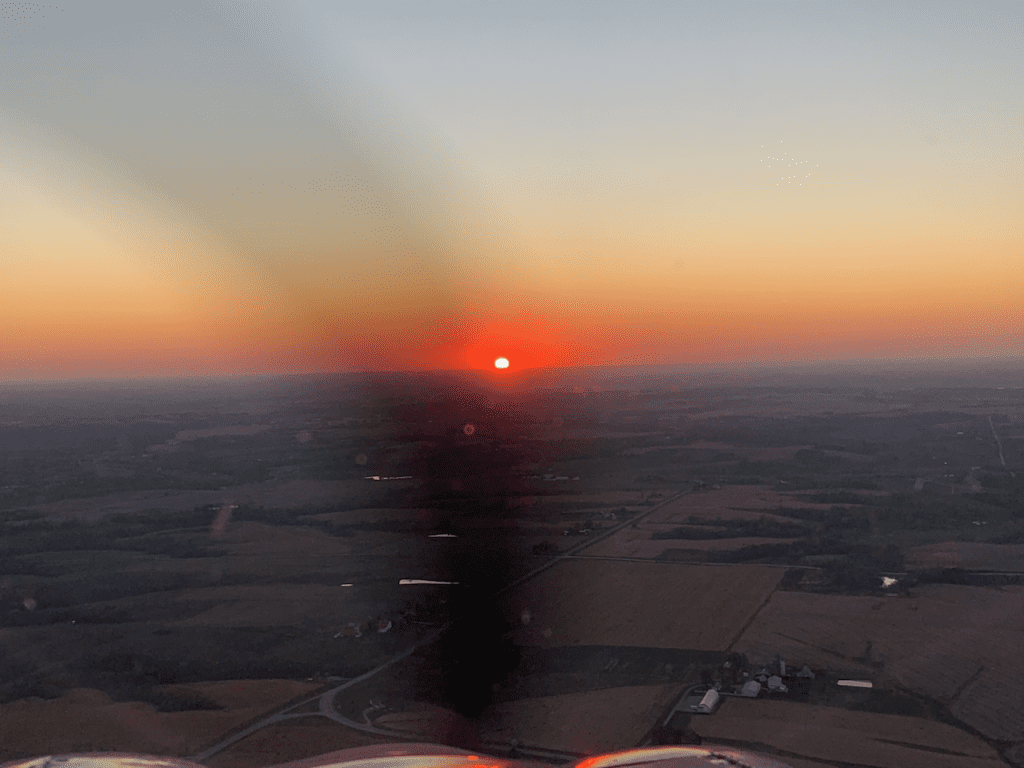
In the past 12 months, the Luscombe and I have spent 156 hours together in the air, seeing glorious sunsets, soaring with eagles, and having one heck of a time.
I’d suggest you fly one if you have a chance. Flying low and slow in a true stick-and-rudder aircraft is nothing but pure joy!